
Combat effects
Understand damage bonuses, choose useful buffs and know what their limits mean.

How damage bonuses combine
Two items can both say they increase damage but affect different parts of the calculation. The category decides what they add to and whether a cap limits them. This is why a coating can still help a build that already has enough Empower.
Bonuses in the same group usually add together. Separate groups multiply. A base-damage bonus adds to your other base-damage bonuses before multiplying with Empower; it is not always that much extra final damage.
| Bonus | How it works | What this means for your build |
|---|---|---|
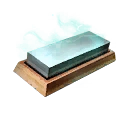
| Ordinary Empower | Adds within the ordinary 50% cap. Honing stones belong here. | Another source only raises damage while there is room below the cap. |
| Base-damage bonus | Adds in a separate group from Empower, alongside applicable critical-hit bonuses. | Can help at the Empower cap, but its value depends on the bonuses already in this group. |
| Enemy-family damage | Applies against a matching family. Weapon coatings use this bonus outside the ordinary Empower cap. | Match the enemy family. An Ancient coating still helps against Ancients when ordinary Empower is capped. |
For a simplified 1,000-damage hit, 20% base-damage bonus and 30% Empower give 1,000 × 1.20 × 1.30 = 1,560 damage before defences. Adding the percentages and calling it 50% extra would give the wrong answer. This example excludes critical hits and other modifiers.
Choose bonuses for the fight
A cap is a limit on a bonus, not a target you automatically maintain. Uptime means how long an effect is active. Check your ordinary attacks and the gaps between abilities as well as the moment when every buff is running.
A honing stone can cover those gaps. It may add no damage during a fully buffed attack, then become useful again when a temporary Empower effect ends. Include buffs from your group when deciding how much Empower you need.
A coating answers a different question: which enemy are you fighting? Use the matching family even when Empower is capped. Mutation elements describe another part of the encounter. Overgrown Lazarus still calls for an Ancient coating against its Ancient enemies.
Check which hits receive a bonus. A fire-only effect helps the fire portion of a split-damage hit; it does not boost its slash portion. An effect tied to an ability or weapon also needs that condition to be met. Compare the actual hit in the calculator before replacing a more reliable bonus.
Some sources have special cap rules. The calculator's uncapped label does not mean you can add that percentage on top of 50%. Select the sources together and check the effective total for each damage type.
Suppose your other ordinary Empower sources total 45%. A 7% Powerful Honing Stone brings that to 52%, with 50% effective. When a temporary 20% buff ends, the total falls to 32% with the stone or 25% without it. The stone contributes all seven percentage points during that gap.
Empower
Increases the damage you deal. Apply it before your damage window, then attack while the buff is active. Some sources only affect particular damage types or attacks.
Ordinary Empower has a 50% cap. Separate damage bonuses and effects assigned to other categories can behave differently; adding every percentage on your build does not give a reliable final damage multiplier.
With no other modifiers, 20% Empower turns a 1,000-damage hit into 1,200 before the target's mitigation.

Weaken
Reduces the damage dealt by the affected enemy or player. Keeping it on a boss protects everyone the boss hits, so applying it before a dangerous attack helps the whole group.
The ordinary Weaken category is capped at a 50% reduction. Its interaction with Empower and other damage modifiers means the final reduction depends on the attacker.
An otherwise unmodified 1,000-damage hit becomes 800 with 20% Weaken, before the defender's mitigation.

Fortify
Most player Fortify effects increase physical and elemental armour. More armour means more mitigation, but 20% Fortify does not mean 20% less incoming damage. Your starting armour matters.
The ordinary armour-based Fortify category allows up to +200% armour. Some effects use direct absorption instead. Read the effect's description before comparing the two.
If you have 1,000 armour and no other armour modifiers, 20% Fortify raises it to 1,200.

Rend
Most player Rend effects reduce the target's armour. Everyone attacking that target benefits while the debuff lasts. Maintaining Rend can therefore help the group more than a small increase to your own damage.
The ordinary armour-based Rend category is capped at 70%. Effects that change damage absorption use a different category, and some enemies resist debuffs.
With no other armour modifiers, 20% Rend lowers 1,000 armour to 800. That changes mitigation; it does not simply add 20% damage to every hit.

Disease
Reduces healing received by the affected target. It can weaken enemy self-healing, but on your character it makes incoming healing and affected consumables less effective.
The ordinary category is capped at 50%. Mutation effects can use their own category and stacking rules, so inspect the active promotion as well as your debuff bar.
If 20% Disease is the only healing modifier, a heal that would restore 5,000 health restores 4,000 instead.

Haste and Slow
Haste increases movement speed; Slow reduces it. These affect positioning and movement rather than the damage of an attack. A Slow can make it harder to leave an area attack in time.
The ordinary Haste category caps movement and sprint bonuses at 40%. An effect's duration and activation condition still matter, especially when it only triggers after a dodge or hit.
A short Haste buff after an ability can help you move back into the healer's area before the next boss attack.
Damage over time
Bleed, burn and poison are examples of damage over time, often shortened to DoT. They deal repeated damage ticks while the effect lasts. Reapplying a DoT may refresh it, replace it or add stacks, depending on the ability.
Tick damage, tick interval and duration are different properties. Reducing duration can remove later ticks without changing the damage of each remaining tick. Cleansing removes eligible effects immediately; duration reduction makes them expire sooner.
A 10-second DoT lasts 8.25 seconds with 17.5% duration reduction alone. Its actual number of ticks depends on the effect's tick interval.
Root, stun and silence
Root prevents movement, stun prevents actions, and silence prevents ability use. A stagger interrupts an action briefly; a knockdown also puts the target on the ground. These control effects are different from damage debuffs.
Bosses can resist or ignore forms of crowd control. A cleanse only removes effects it is allowed to remove. For example, the mutation bot identifies curse effects that player abilities cannot cleanse.
Leaving an Oppressive silence zone restores access to your abilities once the silence no longer applies. It is usually safer to move out than to keep trying to cast inside it.
Stacking and uptime
Separate effects can add within a category until its cap is reached. Reapplying the same effect can refresh its timer instead of adding another copy. An ability that explicitly stacks has its own stack limit.
Check the trigger as well as the percentage. A bonus that requires a critical hit, a specific weapon or a health threshold only helps while that condition is met. A smaller bonus maintained through the fight can be more useful than a larger one that rarely activates.